
Novatech Measurements have been providing load cells to the FIA and various F1 teams for over 25 years.
The load cell manufacturer of choice for elite motorsports
The motorsport industry demands the highest levels of precision, reliability and repeatability. Whether developing Formula racing cars, GT vehicles, touring cars or specialist race vehicles, engineers require accurate force measurement data to optimize vehicle performance while ensuring compliance with stringent safety regulations. Applications often involve high vibration, elevated temperatures, rapidly changing loads and limited installation space, making standard force sensors unsuitable for many testing environments.
Novatech Measurements has become a trusted supplier of standard and bespoke load cells for the global motorsport industry and continues to be the exclusive provider of force measurements sensors to a number of Formula one teams, based on a proven track record of innovative designs and precision measurements.
Novatech equipment is used by the Fédération Internationale de l’Automobile (FIA) for testing and scrutineering to enforce the strict rules of the sport and has also been used to test safety features such as the halo.
www.novatechloadcells.co.uk/case-study/testing-the-halo-the-science-of-saving-lives
Performance Testing
Most of the load cells that Novatech sell to the motorsports industry are designed to help the race teams improve race day performance by the design and testing of new components and set-ups. Finite element analysis, precision machining and in-house calibration are used to develop load cells capable of delivery reliable performance under extreme conditions.
Our load cell designs can be used to measure forces in all areas of testing such as aerodynamics, suspension, chassis stiffness, wheel hub forces and deflection tests. These products are typically used for testing in the manufacturer’s facilities between races and are removed before race day to save weight. However, one of our designs is now a permanent fixture on some cars and we are looking to offer more in the way of gauging onto existing components to reduce overall weight. The following are some examples of the products that we already offer to the motorsports industry.
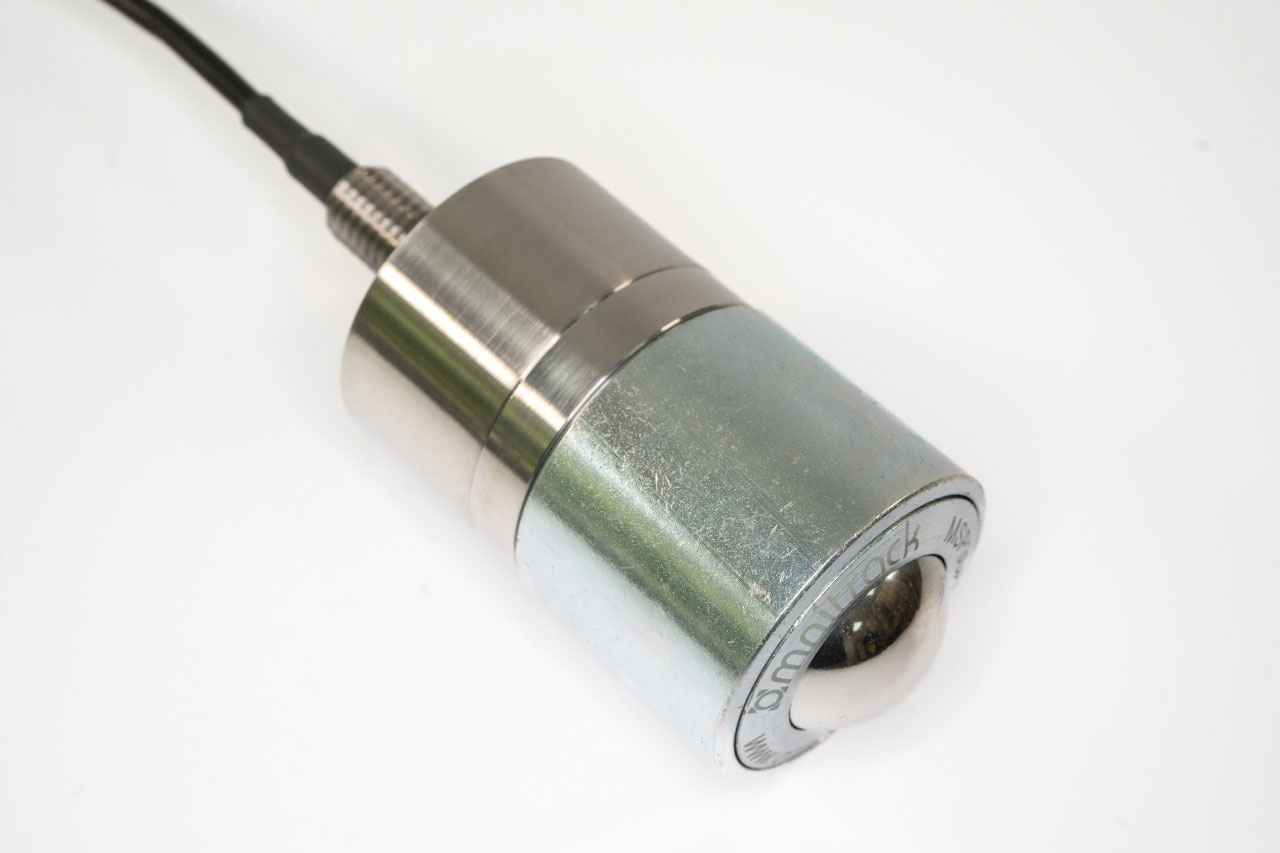
Set-up wheel load cells – are variations on one of our most popular and high-performance items. The F256 is outfitted with a ball transfer unit, and the modified cable exit position allows these to be fixed to an A-frame that gets bolted to the wheel hub in place of the wheel itself. The entire weight of the car gets supported on 8 load cells and the measurements allow the teams to easily tweak weight distribution and achieve the desired balance relative to the measured position of the centre of gravity.
‘Crash kits’ – consist of a number of high stiffness donut load cells and axial load cells fitted with weight distributing pads to test the conformance of body work and chassis sections to the rules set out by the FIA. Special load cells with extension handles and potentiometers are used to measure deflection in key areas, such as the flaps within the drag reduction system, so that applied force and physical movement can be tied together for scrutineering.
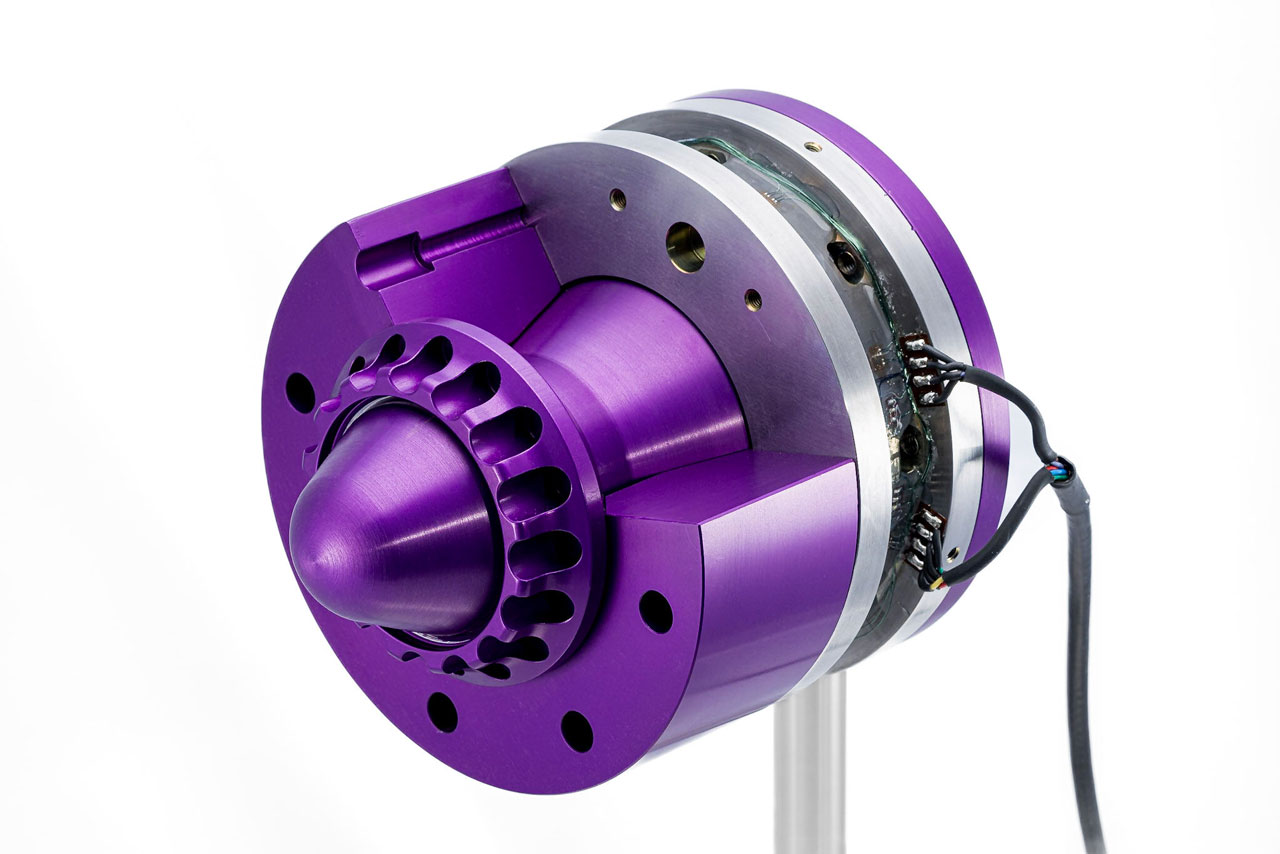
Wheel Hub load cells – bolt between the hub and the wheel to test forces associated with steering, braking and the unique aerodynamic issues associated with open wheel racing. These load cells have also been used to help characterize the forces involved with the unfastening and fastening of the wheel nut during pit stops.
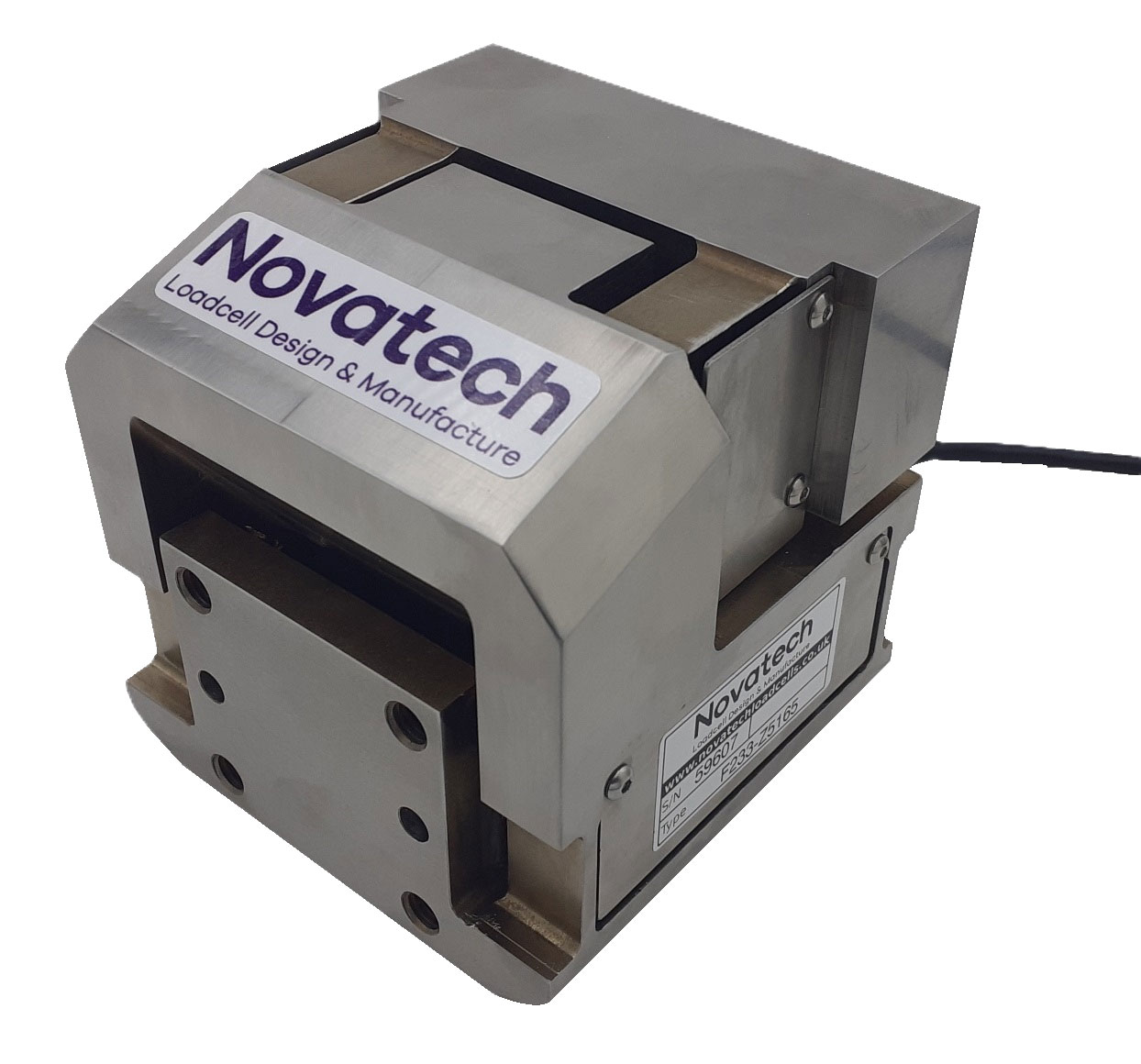
Front and rear wing balance load cells – are multi-axis devices measuring up to 6 components of force within the nose cone connection to the front wing and bulkheads for the stanchions connecting to the rear wing respectively. These are incredibly complicated devices due to the extreme force and moments that act on the locations available for the balances relative to the size of the balances themselves. The size of these devices are limited by the design constraints of the vehicles and, as such, need to be manufactured in a unique way compared to other load cells that Novatech offer.
Calibration of multi-axis devices are conducted on a dedicated rig where it is possible to apply combinations of forces and moments in all directions and measure from all 6 load cell output channels at once. This allows us to create and provide correction matrices to ensure that the influence of one force does not unduly affect the measurement of another due to cross talk. This is further described in one of our blog posts.
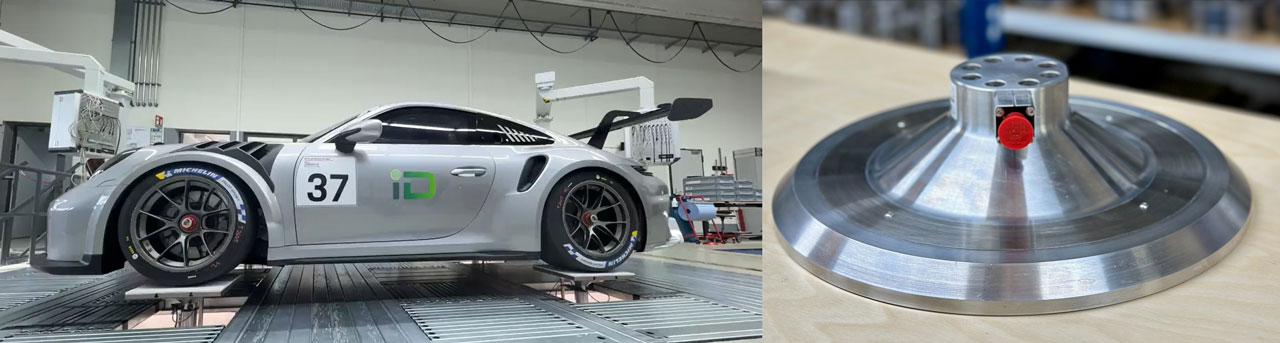
Wheel pan load cells – are used on 7 post dynamic ‘shaker’ rigs that can simulate the effect of entire race distances on the suspension of the car. This is achieved by actuating pistons connected to the front centre and left and right rear corners of the chassis and the remaining four supporting the wheels of the vehicle. Each of these actuators will be connected to a load cell, with the wheel sitting on large sensors referred to as wheel pans. These sensors are fitted with accelerometers and are designed to take extreme vibrations and shock loads, with the latest version of these devices offering improved compensation for force position and angle.
www.novatechloadcells.co.uk/case-study/all-shook-up
Safety Testing
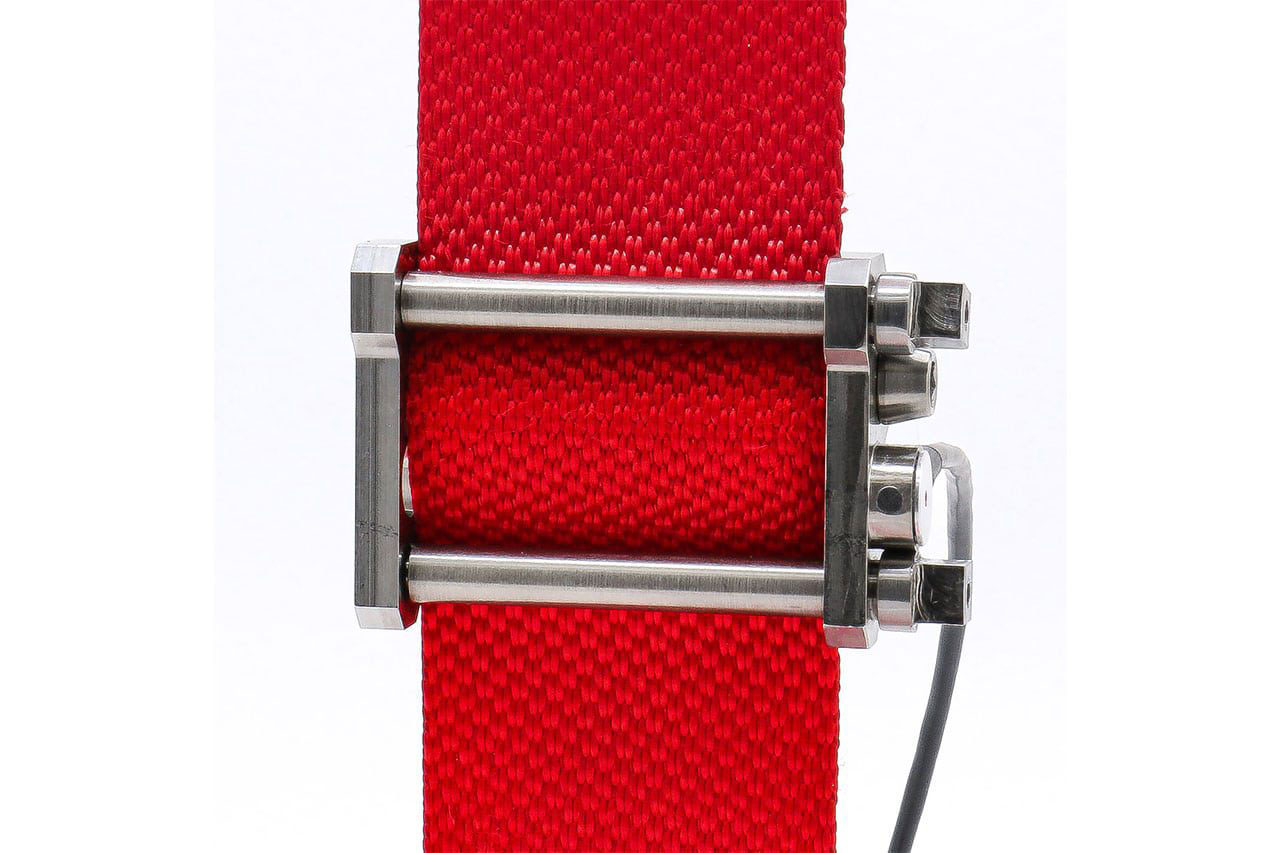
Novatech also provides load cells for safety testing, including belt tension load cells used for checking the effectiveness of driver restraints during crash testing. Other devices are commonly used to ensure the structural integrity of the cockpit, including the halo, which is vital to the safety of the driver should there be a collision between two cars or with the safety barriers.
Other Testing
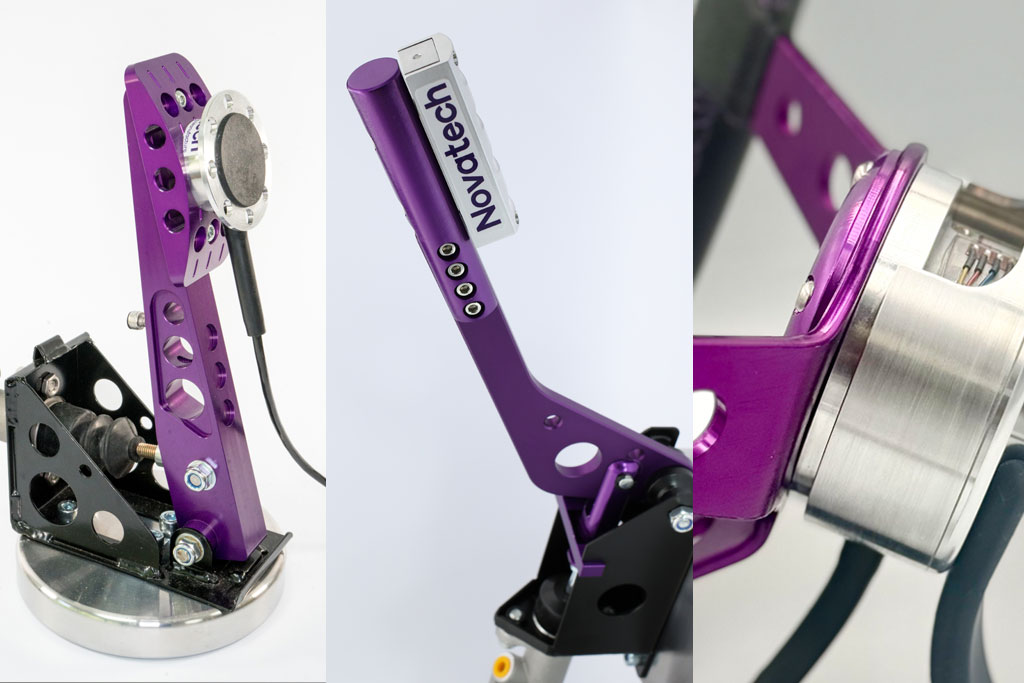
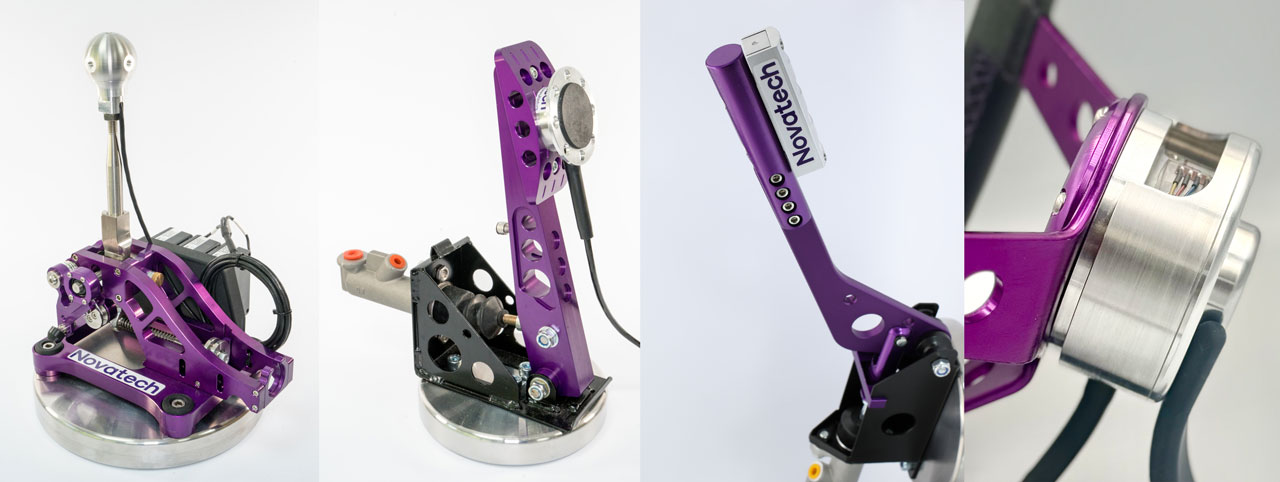
Novatech has a selection of other load cells that are used primarily for ergonomics, ensuring that the input controls with which the driver will interact are comfortable and can be operated effectively with a sensible level of force. These sensors are more commonly used in other motorsports and for production vehicles and include foot pedal load cells, gear shift load cells, hand brake load cells and steering torque transducers.
With decades of experience in bespoke force measurement, Novatech combines innovative engineering with UK manufacturing to delivery reliable, high-performance load cells for the world’s most demanding motorsport applications. Whether developing a new Formula race car, validating suspension geometry, or measuring braking and aerodynamic forces, Novatech provides precision force measurement solutions that engineers can depend on.